Chuckwill
This is a Creek story, told by Legus Perryman and written down by the scholar John Swanton. Perryman had been an interpreter for Chief Pleasant Porter, and in eighteen ninety-one the Creek Nation elected him chief himself. He told Swanton two stories about how his people found their way east. Neither one is about the Okefenokee. They belong to the wider Creek world.
The first is the Coweta story. The Coweta say they came out from under the earth. The ground was soft and muddy, hard to walk on. By and by it dried and turned hard. They were standing on top of a mountain, where they could see the sun rise and the sun set.
They argued about which way to go, toward the sunset or toward the sunrise. In the end they agreed on the sunrise. So they traveled east, slowly, stopping a long time wherever the hunting was good, and then going on again.
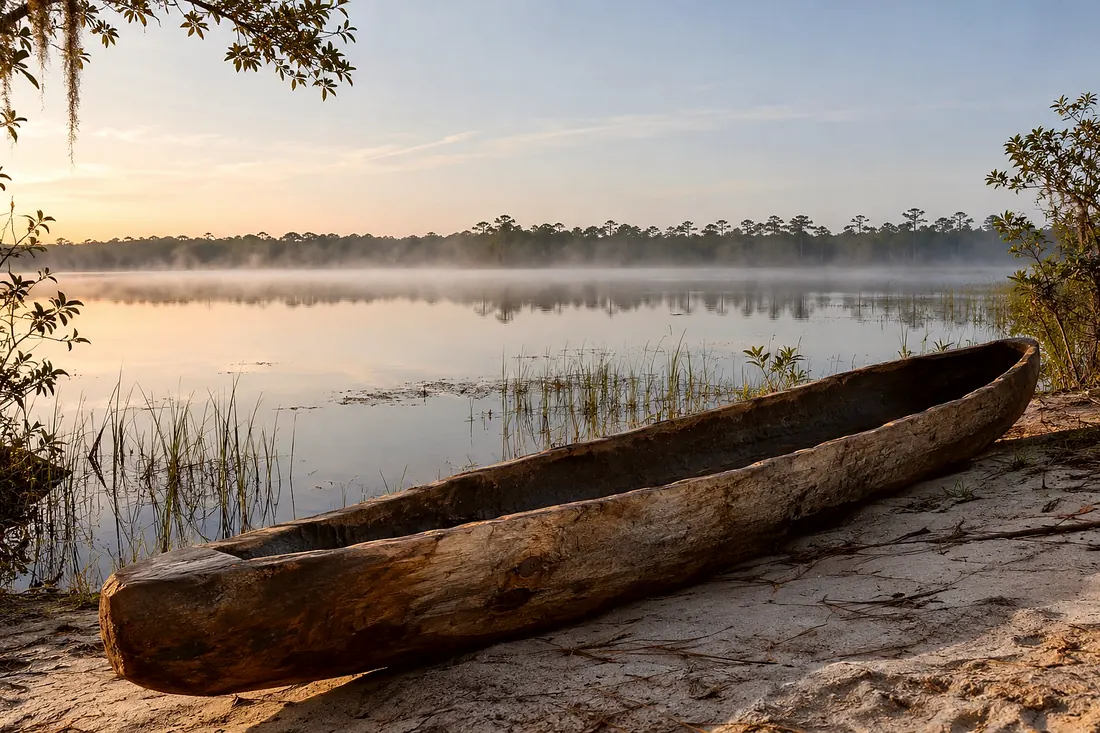
At last they came to a river. It was so muddy and so wide that they stayed on its banks longer than anywhere else. There they began the ball play. Finally they made boats and crossed, and traveled east again until they came to the ocean. They called it the big water.
They found the water would come up and go out again. When it went out, it left oysters and other good things to eat. They stopped there and lived on those, because they could not go any farther. They say they traveled side by side with the Kasihta, and some add the Abihka, though some deny that. The place they started from they call Ilafoni, which means the backbone. Perryman said they name it as the Rocky Mountains.
Then he told Swanton a second story, about the people who became the Coosa, whose descendants are the people of Tulsa. They traveled east toward the rising sun until they came to a big water too wide to cross. They went back to a certain place and lived there a long time.
By and by they came to the same water again, and this time it was narrow. The far shore was well wooded, and it pleased them. Their leader said, we ought to cross, but first I am going to try an arrow. If it landed on the other side, he knew they would get over. He shot, and the arrow went into the woods.
They stayed there until they had put together boats and rafts, and then they crossed safely. They found plenty of game, and settled. After a while they moved east again, a little at a time, always in the same direction. At last they settled for good. They grew very numerous, and they built square grounds.
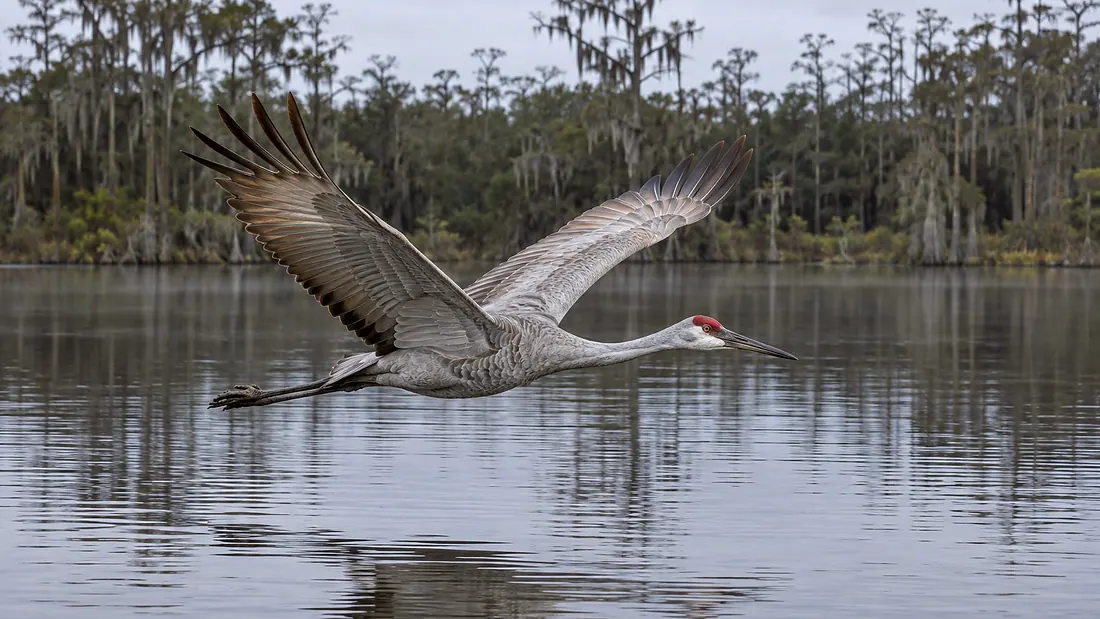
One night, a long time afterward, a dance was held, and every person was there except a newly married couple who had been delayed. When the two reached the square, late at night, there was nothing there but a lake. They stayed on its shore, watching. Birds that tried to fly across fell in and drowned. But one big crane flew all the way over, calling koos, koos, koos. They thought that was its name.
As time went on, the couple had children, and their descendants formed another big town. Because the crane had flown safely over the drowned village, they named the town for it. We shall be called Coosas, they said. Perryman told Swanton that in the town speeches, the people of Tulsa still begin by saying, we are the Coosa people.
East is where both peoples were headed. By the seventeen hundreds, bands of Creeks and their neighbors had moved south into the Okefenokee region to hunt. And the Creek Nation has long called that swamp a most blissful spot on earth.